
English| EUR
Suggested for you
More currencies
Choose a language
The Mexican free-tailed bat colony beneath the Congress Avenue Bridge follows a predictable annual rhythm tied to migration and maternal cycles. Understanding when the bats arrive, when the colony peaks, and when they depart shapes every successful viewing trip to Lady Bird Lake.
Quick answer
The bats emerge nightly from late March through early November, with peak viewing from July through September when the colony swells to over 1.5 million individuals. The largest emergences occur in July and August after maternal bats give birth and pups begin flying, creating the most dramatic nightly spectacle. Activity drops sharply after October as the colony migrates south to Mexico for winter.
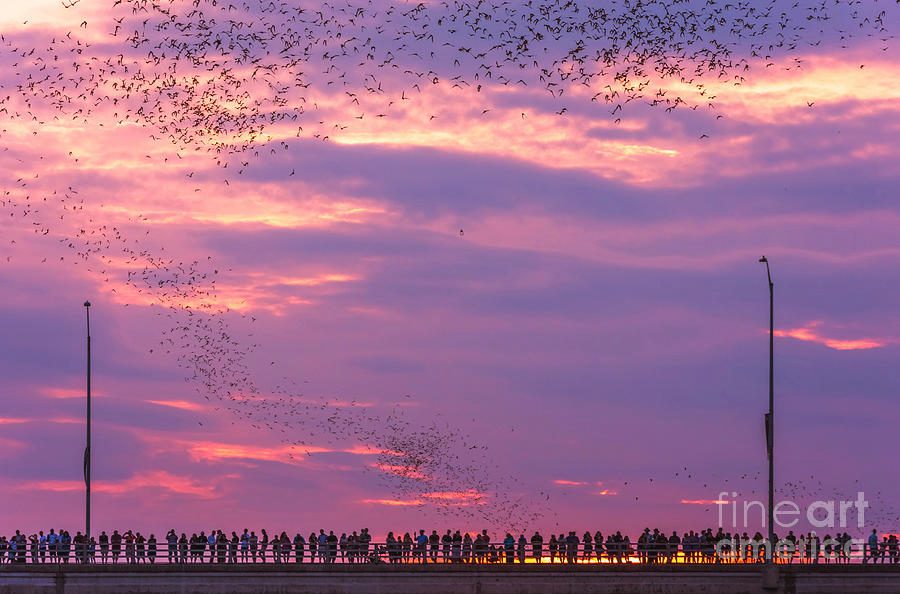
Between 750,000 and 1.5 million Mexican free-tailed bats winter in central Mexico, then migrate north each spring to roost beneath the Congress Avenue Bridge. The first scouts typically arrive in mid-March, with the full colony established by late April. This timing aligns with the species' reproductive cycle: female bats are pregnant during migration and give birth in June, making the bridge one of the largest urban maternity colonies in North America. What time of year do the bats come out in Austin at their most impressive depends entirely on the pup season. Newborn bats remain in the roost for four to five weeks before achieving flight. By mid-July the colony has effectively doubled in size as juveniles join the nightly hunt for insects over Lady Bird Lake and the surrounding Hill Country. A single emergence during this window can last forty-five minutes, with bats streaming east in a dark ribbon visible against the sunset. The column rises in pulses as different sections of the roost take flight, and the sheer density of animals creates a low hum audible from the bridge deck and shoreline observation areas. August represents the statistical peak for both colony size and reliable emergence windows. Thermal conditions stabilize, insect populations reach their summer maximum, and the young bats have developed the stamina for extended foraging flights. By late September the juveniles have matured and the colony begins to thin as early migrants depart. The departure accelerates through October, and by early November only stragglers remain. Winter sightings are extremely rare; the bridge sits empty from December through February. Emergence timing within the active season shifts with sunset, which ranges from around 8:30 PM in June to 7:00 PM in September. Bats typically exit fifteen to thirty minutes after the sun drops below the horizon, though temperature, wind, and barometric pressure all influence the exact moment. Cold fronts and rain can delay or suppress emergence entirely. The Austin bat season operates on a biological clock calibrated to insect availability, not human schedules, and the rhythm holds whether ten people are watching or a thousand. Congress Avenue Bridge has hosted this colony since 1980, when reconstruction created the expansion joints and crevices the species prefers. What began as a public nuisance is now a protected seasonal migration point, with the bats consuming an estimated ten to thirty tons of insects each night during peak season. The spectacle is free, the bridge is open year-round, and the bats follow the same pattern every year.
“By mid-July the colony has effectively doubled in size as juveniles join the nightly hunt, with a single emergence lasting forty-five minutes.”
The Mexican free-tailed bat colony resides at the Congress Avenue Bridge from March through October, with the peak viewing window occurring during late summer. Emergence timing fluctuates based on daily weather conditions and sunset patterns.
Mild, 70°F–85°F
Bats arrive for the season and begin establishing the colony. Emergence is often smaller than later in the year.
Hot, 90°F–100°F+
This is the peak season for colony size as pups begin flying. Emergence typically occurs closer to sunset.
Cooling, 75°F–90°F
The colony prepares for migration to Mexico. Viewings remain active until the bats depart as temperatures drop.
Verdict: The best opportunity to view the colony is during August, choosing a weekday evening to avoid peak weekend crowds while ensuring the highest number of bats are present.
The public viewing areas around the Congress Avenue Bridge are open 24 hours daily, allowing visitors to arrive at any time.
Although the bridge is open daily, bat viewings are seasonal. The colony resides under the bridge from March to October, and emergence typically occurs around sunset.
Access to the public viewing spots at the Congress Avenue Bridge carries no cost. Visitors do not need tickets to watch the bats emerge from these municipal areas.
Verdict: A typical adult pays 0 USD to watch the bats, with only parking or independent water tours requiring payment.
The bat colony is located at the Congress Avenue Bridge, Austin, TX 78704, which spans Lady Bird Lake. The area is accessible by various modes of transport, with several parking options available in the downtown vicinity.
Congress Avenue, Austin, TX 78704
Routes stopping at Congress/1st St
Access via Ann and Roy Butler Hike-and-Bike Trail
Plan your travel to reach the bridge within the 18:00–20:00 arrival window. Arriving before sunset is necessary to secure a viewing spot, as the exact timing of the emergence depends on local weather conditions.
Prepare for your bat-viewing visit with these essential steps.
Everything you need to know about what time of year do the bats come out in austin
If you want to know what time of year do the bats come out in austin, the primary season runs from mid-March to late October or early November. During these months, the Mexican free-tailed bats reside under the bridge as a maternity colony before migrating south for winter. Late July through August offers the most spectacular viewings as the newborn pups begin flying.
The nightly flight typically occurs around sunset, but the exact timing shifts as the seasons change. In the hot, dry summer months, they often emerge earlier, sometimes even before the sun fully sets. If you are wondering what time of year do the bats come out in austin for the earliest nightly show, late August is generally the most consistent period.
No, public viewing from the bridge sidewalk or the grassy knoll on the southeast bank is completely free of charge. You can simply walk up and find a spot without paying any entrance fee. Visitors looking for a closer look can also book a guided austin bat kayak tour from the water below.
During the winter, most of the colony migrates south to warmer climates in Mexico. While a small population of up to 100,000 bats may remain year-round, you will rarely see a large emergence during these colder months. This is why knowing what time of year do the bats come out in austin is crucial for planning a successful viewing trip.
The bridge is located at Congress Avenue Bridge, Austin, TX 78704, which is easily accessible by walking from downtown or using public transit. If you are driving, arrive early to secure street parking or a spot in nearby parking garages. Many visitors prefer taking a sunset cruise or booking a skip-the-line Congress Bridge tour to experience the event from Lady Bird Lake.
Yes, watching the bats is a family-friendly activity suitable for children of all ages. To ensure a comfortable experience, arrive early during the best arrival window of 18:00–20:00 to secure a spot against the bridge railing. Knowing what time of year do the bats come out in austin helps parents plan around the warmer summer months when the flight happens at a more child-friendly hour.
The public viewing areas on the bridge and the adjacent observation grassy knolls are open daily from 00:00 to 23:59. You can access these spots at any hour of the day without restrictions. However, the best timeframe to gather for the flight is typically between 18:00 and 20:00.