
English| EUR
Suggested for you
More currencies
Choose a language
The Congress Avenue Bridge bat colony follows a predictable rhythm tied to migration, temperature, and sunset. Understanding the seasonal window and nightly emergence pattern helps you plan a visit that aligns with peak activity rather than an empty sky.
Quick answer
The bats are visible at Congress Avenue Bridge from mid-March through early November, with peak numbers between July and September. Nightly emergence begins around sunset, typically 20 to 40 minutes after the sun drops below the horizon. Arrive between 6:00 PM and 8:00 PM to secure a viewing spot before the colony exits the bridge.
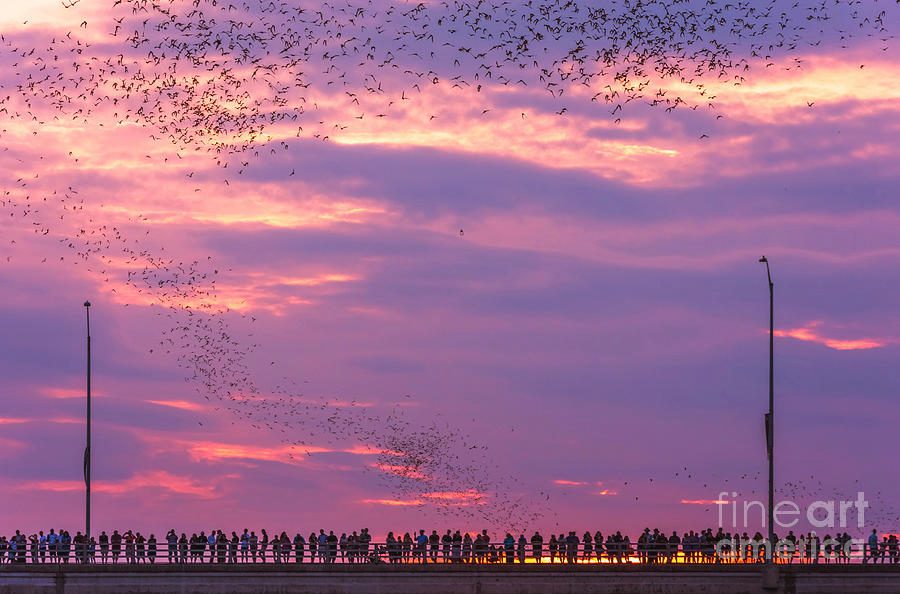
Between 750,000 and 1.5 million Mexican free-tailed bats occupy the crevices beneath Congress Avenue Bridge during the warm months, forming the largest urban bat colony in North America. The population swells through summer as maternal colonies raise pups, then thins in autumn as the bats begin their migration south to Mexico. The viewing season runs from mid-March, when scouts return from winter roosts, through early November, when the last stragglers depart. July and August deliver the highest counts, as newly volant juveniles join the nightly exodus. Spring and fall offer smaller but still substantial emergences, with cooler evenings sometimes delaying the flight by ten or fifteen minutes. The bats do not emerge on a fixed clock; their departure is tied to twilight, insect activity, and temperature, so sunset serves as the anchor rather than an exact minute. When to see the bats in Austin depends on whether you prioritize spectacle or solitude. Midsummer weekends draw crowds to the bridge and the adjacent observation area on the southeast bank of Lady Bird Lake, while April and October see fewer visitors and a quieter experience. The emergence itself unfolds over twenty to forty minutes, beginning with scattered scouts and building into a continuous ribbon that stretches east across the lake. Weather plays a role: heavy rain or sustained winds below 50°F can suppress the flight entirely, and cold snaps in late October sometimes trigger early migration. The bridge and surrounding public areas remain accessible around the clock, but practical viewing begins roughly an hour before sunset. Securing a position on the bridge sidewalk or the grassy slope near the Austin American-Statesman building ensures an unobstructed sightline as the column rises. Twilight lingers longer in summer, so a 7:30 PM arrival in late June still offers ample time, while a September visit benefits from arriving closer to 6:45 PM. The bats' return occurs before dawn, but the pre-sunrise ingress lacks the visual drama of the evening departure and draws almost no spectators.
“The emergence unfolds over twenty to forty minutes, beginning with scattered scouts and building into a continuous ribbon that stretches east across the lake.”
The optimal time to view the Mexican free-tailed bat colony at Congress Avenue Bridge is during the warm months from late spring to early fall. During this period, the bats emerge nightly to hunt, providing the most active displays.
Temperatures 75°F to 90°F
Bat pups begin to fly and colony activity increases.
Temperatures 90°F to 100°F+
Highest colony population makes for the largest emergences.
Temperatures 70°F to 85°F
The colony remains active before migrating south for winter.
—
Arrive early between 18:00–20:00 to secure a viewing spot for the nightly emergence.
Verdict: The best opportunity to observe the bats is on a weekday from Tuesday to Thursday during the peak summer months of July or August, arriving within the 18:00–20:00 window.
The public observation areas around the Congress Avenue Bridge are open 24 hours a day, seven days a week. You can access the bridge sidewalks and the nearby waterfront trail at any time.
The bat colony resides under the Congress Avenue Bridge in central Austin. The bridge is easily accessible by public transit, car, or on foot via the Ann and Roy Butler Hike-and-Bike Trail.
CapMetro lines 1, 7, 10, or 20 to Congress/Riverside
I-35 or US-290 to Congress Avenue Bridge
Ann and Roy Butler Hike-and-Bike Trail to Congress Avenue Bridge
The Congress Avenue Bridge is located at Congress Avenue Bridge, Austin, TX 78704. Plan to arrive during the 18:00–20:00 window to secure a viewing spot before the emergence begins.
Maximize your experience at the Congress Avenue Bridge by preparing for the environment and understanding the natural behavior of the colony.
Bring insect repellent, as the humid environment near Lady Bird Lake often attracts mosquitoes during the evening hours.
The bats typically emerge in a steady stream rather than all at once, so remain patient after the first few leave the crevices.
Wear comfortable walking shoes since the observation areas often require standing on concrete or navigating uneven terrain for extended periods.
Avoid using flash photography or bright spotlights, as these can disorient the bats and interfere with their exit from the bridge structure.
High winds or heavy rain can delay or significantly reduce the number of bats that choose to emerge for their nightly flight.
Everything you need to know about when to see the bats in austin
The peak season for viewing the Mexican free-tailed bats runs from late March through October. During these months, the mammals fly out nightly from under the structure to hunt for insects. The largest crowds gather in late summer when the newly born pups join their mothers in flight.
The best arrival window is 18:00–20:00, which allows you to secure a good spot before the nightly emergence begins. To see the Congress Avenue Bridge bats, arriving early is highly recommended because the flight typically starts around sunset. Arriving early also gives you plenty of time to find parking.
The entrance fee is 0 USD, meaning there is free entry for public viewing from the bridge and observation area. Knowing when to see the bats in austin helps you time your arrival for this free wildlife spectacle. You do not need tickets or reservations to watch from the designated pedestrian areas.
An Austin bat kayak tour offers an excellent viewpoint from the water. Paddling on Lady Bird Lake allows you to sit directly below the bridge as the animals depart. This perspective is particularly popular during late summer when the maternity colony is at its largest.
Heavy rain or high winds can delay or prevent the evening flight. The animals may choose to stay sheltered under the bridge structure if it is storming. Checking the local weather forecast before heading out is highly recommended to avoid disappointment.
As one of the most famous Austin landmarks, this area has nearby amenities but no dedicated public restrooms directly on the bridge. Public facilities can be found at the adjacent Austin American-Statesman viewing area or in nearby restaurants. Visitors should plan ahead, especially when traveling with children.
Watercraft rentals and guided boat excursions are widely available for those who want a structured experience. These options allow you to learn about the colony's biology from local guides. Booking in advance is recommended during the busy summer months.